Episode 10: Pulp Legal Fiction: The Bizarre Case Of Tee-hit-ton v. US
On • Duration 48:00
Powered by RedCircle
Domination Chronicles unpacks Tee-Hit-Ton v. United States (1955) and the doctrine of Christian discovery, comparing it with Brown v. Board of Education to show how both cases advanced U.S. projects of racial segregation, land theft, and global domination.
PULP LEGAL FICTION: THE BIZARRE CASE OF TEE-HIT-TON V. US
Today we do a 70-year retrospective on the 1955 Supreme Court decision, Tee-Hit-Ton v. United States, which reaffirmed the 1823 US claim of a right of domination announced in Johnson v. McIntosh. But Tee-Hit-Ton also did something else: It laundered the Johnson decision for 20^th^ century sensibilities by deleting the word "Christian" from the "doctrine of Christian discovery". That redaction made it possible for later judges -- like Ruth Bader Ginsburg in 2005 -- to avoid the religious basis of the claim of a right of domination. In fact, the rhetorical clean-up increased the use of Johnson v. McIntosh as a legal precedent in federal anti-Indian law.
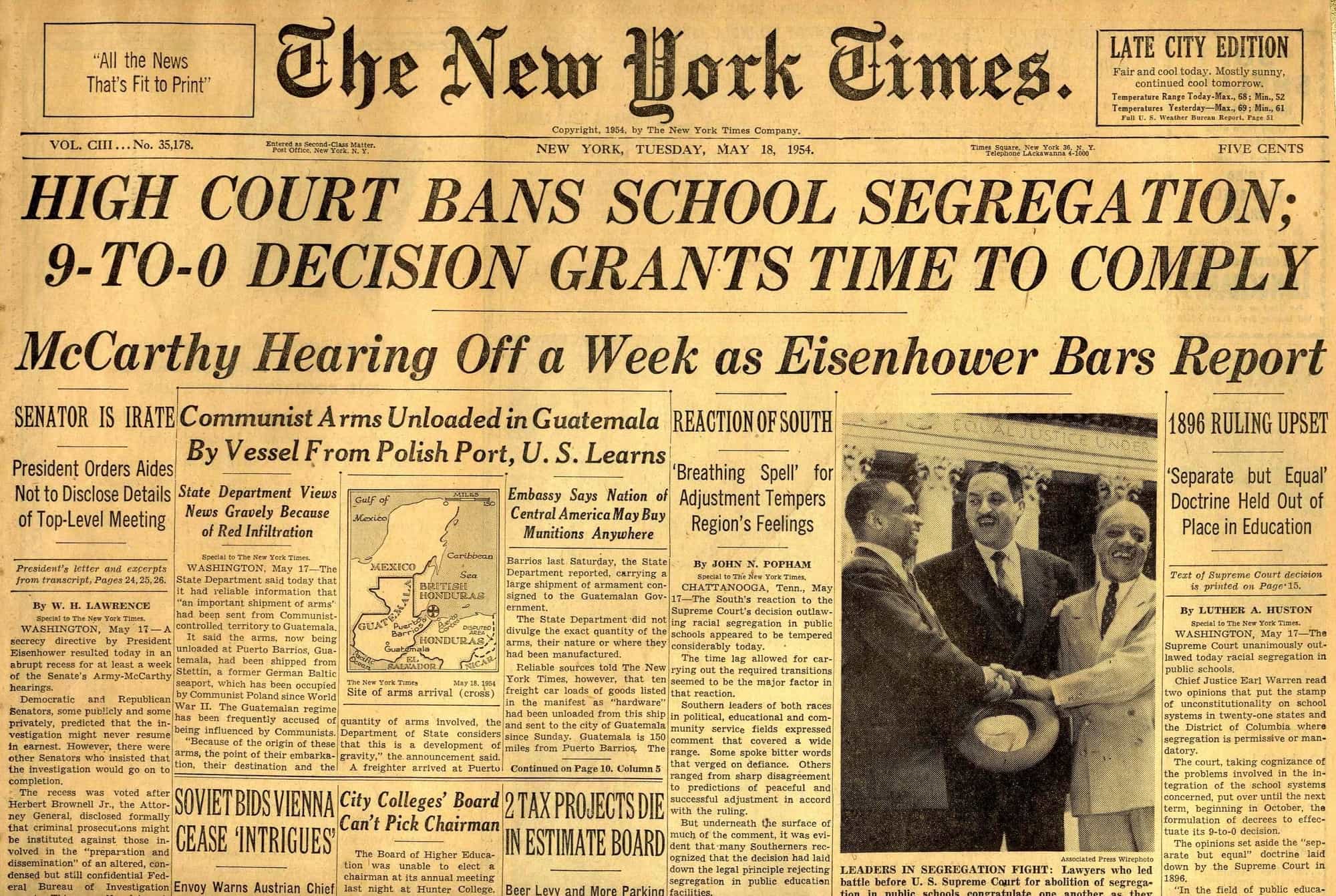
We compare Tee-Hit-Ton with the decision one year earlier in Brown v. Board of Education that overturned the segregation doctrine of "separate but equal". We explain how these two cases, apparently completely divergent in their outcomes, were actually on the same trajectory.
In Brown, the court overturned the "separate but equal" doctrine because it obstructed the "Cold War" quest of the United States to dominate international politics. In Tee-Hit-Ton, maintaining but hiding the doctrine of Christian discovery - the claim of ownership of the "North American" landmass, with its many sites of strategically important industrial resources (like the timber taken from Tlingit land) - supported a core U.S. geopolitical interest. Taken together, Brown and Tee-Hit-Ton were parts of a mission to dominate the world - literally.
Transcript
Download an AI Generated Transcript of this conversation
Resources:
Tee-Hit-Ton v. US https://www.courtlistener.com/opinion/105268/tee-hit-ton-indians-v-united-states/ {Access to briefs filed in the case are available only through databases like Westlaw.}
Brown v. Board of Education https://supreme.justia.com/cases/federal/us/347/483/#tab-opinion-1940809
New York Times coverage of Brown https://africanamericancollection.com/relaunch/wp-content/uploads/2015/03/Brown-v-Board-1954-369kb.jpg
Johnson v. McIntosh https://www.law.cornell.edu/supremecourt/text/21/543
William Blackstone, Commentaries on the Laws of England,vol. 2, p. 2 (1765) {"property; or that sole and despotic dominion"} https://opencasebook.org/casebooks/510-open-source-property/resources/3.2.3-blackstone-commentaries-on-the-laws-of-england-vol-2-p-2/
Joseph Story, Commentaries on the Constitution of the United States (1833), Book 1, Chapter 1, "Origin of the Title to Territory of the Colonies" https://lonang.com/library/reference/story-commentaries-us-constitution/sto-101/
Universal Declaration of Human Rights https://www.ohchr.org/en/human-rights/universal-declaration/translations/english
"Termination" Policy https://www.archives.gov/research/native-americans/bia/termination
"McGirt v. Oklahoma: Revealing and Concealing Domination" https://www.youtube.com/watch?v=W9GFzDbzphE&t=167s
Citation
Steve Newcomb and Peter d’Errico, "E010: Pulp Legal Fiction: The Bizarre Case Of Tee-hit-ton v. US," Domination Chronicles (Podcast), December 22, 2025. https://dominationchronicles.com/episodes/e010-tee-hit-ton/
Citation Downloads
Episodes
Our Lastest Podcast Epsiodes
Episode 23: Bishops, Papal Bulls, and the Problem of Domination
Play EpsiodeEpisode 22: Where Are We Now? Why Domination Is the Beginning of the Conversation, Not the End
Play EpsiodeEpisode 21: “Tribal Sovereignty” 101: Limited Sovereignty, Federal Domination, and the Language Trap
Play EpsiodeAbout Host
Domination Chronicles Host

Peter d’Errico graduated from Yale Law School in 1968. He was an attorney at Dinébe’iiná Náhiiłna be Agha’diit’ahii, Navajo Legal Services, in Shiprock, 1968-1970.

Steven T. Newcomb (Shawnee/Lenape) has been researching the history of U.S. federal Indian law and policy for four decades.