Episode 18: MARK SAVAGE: “NATURAL RIGHTS” -- UNRAVELLING THE QUESTIONS
On • Duration 1:09:06
Powered by RedCircle
In our latest Domination Chronicles conversation with attorney Mark Savage, we revisit plenary power one of the central legal fictions of U.S. federal Indian law and ask what becomes possible when we return to the reality of original free existence.
Introduction
Attorney Mark Savage joins us in this episode for a provocative discussion of the US claim of “plenary power” over Native nations and peoples. In the early 1990’s (!), Mark authored two seminal law review articles showing that the doctrine of “plenary power” has no basis in the US Constitution. In November 2025, in a dramatic move at the Supreme Court, two justices took the same stance! ( Steve and I discussed that at https://www.youtube.com/watch?v=jtTV9ZAKWtc )
Today, the three of us explore the deep history behind the claim of “plenary power”, reaching back through English Common Law and the trajectory of Christendom. We also discuss possible futures if/when the claim of “plenary power” were overturned by the Supreme Court.
The philosophical depth of the issues becomes apparent when we reach the concept of “natural rights”, which is another way of talking about “original free existence” and which was rejected in the 1823 Johnson v. McIntosh decision when the Supreme Court laid the foundation for “plenary power” by declaring that the US holds “title” to Indigenous Peoples’ lands.
For those new to the issues, our conversation provides an accessible entry point; for experienced listeners, we point to a variety of resources for further study.
Speakers
- Peter P. d'Errico (Co-host): A researcher and writer with decades of experience in indigenous people's issues
- Steven Newcomb (Co-host): Also a veteran researcher in the field, focusing on themes of colonization and domination.
- Mark Savage (Guest): A civil rights litigator and author of seminal law review articles from the early 1990s that challenged the constitutional basis for U.S. "plenary power" over indigenous nations.
Topics of Discussion
Mark Savage's Background and Philosophy: Savage recounts his journey from studying philosophy at UC Berkeley to attending Stanford Law School, where he was influenced by Professor Derrick Bell's teachings on race and the law. He discusses how a philosophical orientation is crucial for questioning the foundational principles behind legal doctrines.
Challenge to Plenary Power: A central theme is Savage's research showing that the "plenary power" (total power) the U.S. claims over Native nations lacks a foundation in the Constitution's Indian Commerce Clause. The speakers discuss how this doctrine was largely "made up" out of thin air.
Supreme Court Developments: The group discusses recent dissents by Justices Gorsuch and Thomas that have begun to challenge the plenary power doctrine. However, Savage expresses caution, noting that while they criticize federal plenary power, they have not yet clarified what should replace it or if they might favor state power instead.
The Doctrine of Discovery: They examine Johnson v. McIntosh and the "Doctrine of Christian Discovery," noting that these concepts are not mentioned in the Constitution but are used to justify domination.
Legal "Silence" and Routine: The speakers lament the "deafening silence" from the Federal Indian Bar regarding these fundamental challenges. They suggest that many lawyers find it easier to work within the existing, flawed system rather than challenging its core legitimacy. Important Terms and Topics
Plenary Power: The claim of absolute, total federal authority over indigenous nations.
Doctrine of Discovery: A legal principle used to claim land and sovereignty based on European arrival, which the speakers argue has no constitutional basis.
Indian Commerce Clause: The specific section of the Constitution often cited (incorrectly, according to Savage) as the source of plenary power.
Original Free Existence: The inherent sovereignty and independence of Native nations that existed before European contact.
Internal Point of View: The necessity of understanding history and law from the perspective of the indigenous people involved, rather than just the colonial recorders.
Bilateral Relations / Treaties: The concept of the U.S. and Native nations acting as equal parties in a treaty-based relationship, rather than a superior-inferior dynamic.
Systemic Litigation: Legal strategies aimed at addressing the root causes of issues like poverty and discrimination rather than just individual cases.
Transcript
Download an AI Generated Transcript of this conversation
Resources:
Mark Savage, “Native Americans and the Constitution: The Original Understanding”, 16 American Indian Law Review 57 (1991) -- https://digitalcommons.law.ou.edu/ailr/vol16/iss1/3/
Mark Savage, “The Great Secret about Federal Indian Law--Two Hundred Years in Violation of the Constitution--And the Opinion theSupreme Court Should Have Written to Reveal It”, 20 N.Y.U.Review Of Law & Social Change 343 (1992) -- [https://socialchangenyu.com/wp-content/uploads/2017/12/Mark-Savage_RLSC_20.2.pdf]https://socialchangenyu.com/wp-content/uploads/2017/12/Mark-Savage_RLSC_20.2.pdf)
Steve Newcomb, “The Evidence of Christian Nationalism In FederalIndian Law: The Doctrine of Discovery, Johnson v. McIntosh, andPlenary Power”, 20 _N.Y.U. Review Of Law & Social Change_343 (1993) --https://socialchangenyu.com/wp-content/uploads/2017/12/Steven-Newcomb_RLSC_20.2.pdf
“Indian Commerce Clause”, US Constitution, Article 1, Section 8,Clause 3 --https://press-pubs.uchicago.edu/founders/tocs/a1_8_3_commerce.html
Johnson v. McIntosh (1823) --https://supreme.justia.com/cases/federal/us/21/543/
“Healing Global Wounds” --https://publishing.cdlib.org/ucpressebooks/view?docId=ft8g5008gq;chunk.id=d0e11745;doc.view=print
Indian General Allotment Act (1887) --https://www.govinfo.gov/content/pkg/COMPS-5297/pdf/COMPS-5297.pdf
Gorsuch / Thomas dissenting in Quentin Veneno, Jr. v. UnitedStates --https://www.supremecourt.gov/opinions/25pdf/24-5191_6479.pdf
Yakama Nation amicus brief in Washington v. Cougar Den(2019) -- https://www.supremecourt.gov/DocketPDF/16/16-1498/64580/20180924115810387_36893%20pdf%20Yakama%20Nation%20br.pdf
Kent McNeil, Common Law Aboriginal Title (1989) --https://archive.org/details/commonlawaborigi0000mcne/page/n5/mode/2up
Interlinks
Be sure to visit these other great resources on this and other important cultural subjects!
Mapping the Doctrine of Discovery Podcast S6E02: A Theologian Confronts the Doctrine of Discovery and Calls for Institutional Repair - Author and professor Jeannine Hill Fletcher speaks with Phil Arnold and Sandy Bigtree. - https://podcast.doctrineofdiscovery.org/season6/episode-02/
Journal for Cultural and Religious Theory - https://jcrt.org/archives/23.1/
Citation
Steve Newcomb and Peter d’Errico, "Episode 18: MARK SAVAGE: “NATURAL RIGHTS” -- UNRAVELLING THE QUESTIONS," Domination Chronicles (Podcast), 2026-03-05, https://dominationchronicles.com/e018-mark-savage-natural-rights-unravelling-the-questions.
Citation Downloads
Episodes
Our Lastest Podcast Epsiodes
Episode 22: Where Are We Now? Why Domination Is the Beginning of the Conversation, Not the End
Play EpsiodeEpisode 21: “Tribal Sovereignty” 101: Limited Sovereignty, Federal Domination, and the Language Trap
Play EpsiodeEpisode 20 - UNTRUSTWORTHY “TRUST”: DOMINATION, FEAR, AND FEARLESSNESS
Play EpsiodeAbout Host
Domination Chronicles Host
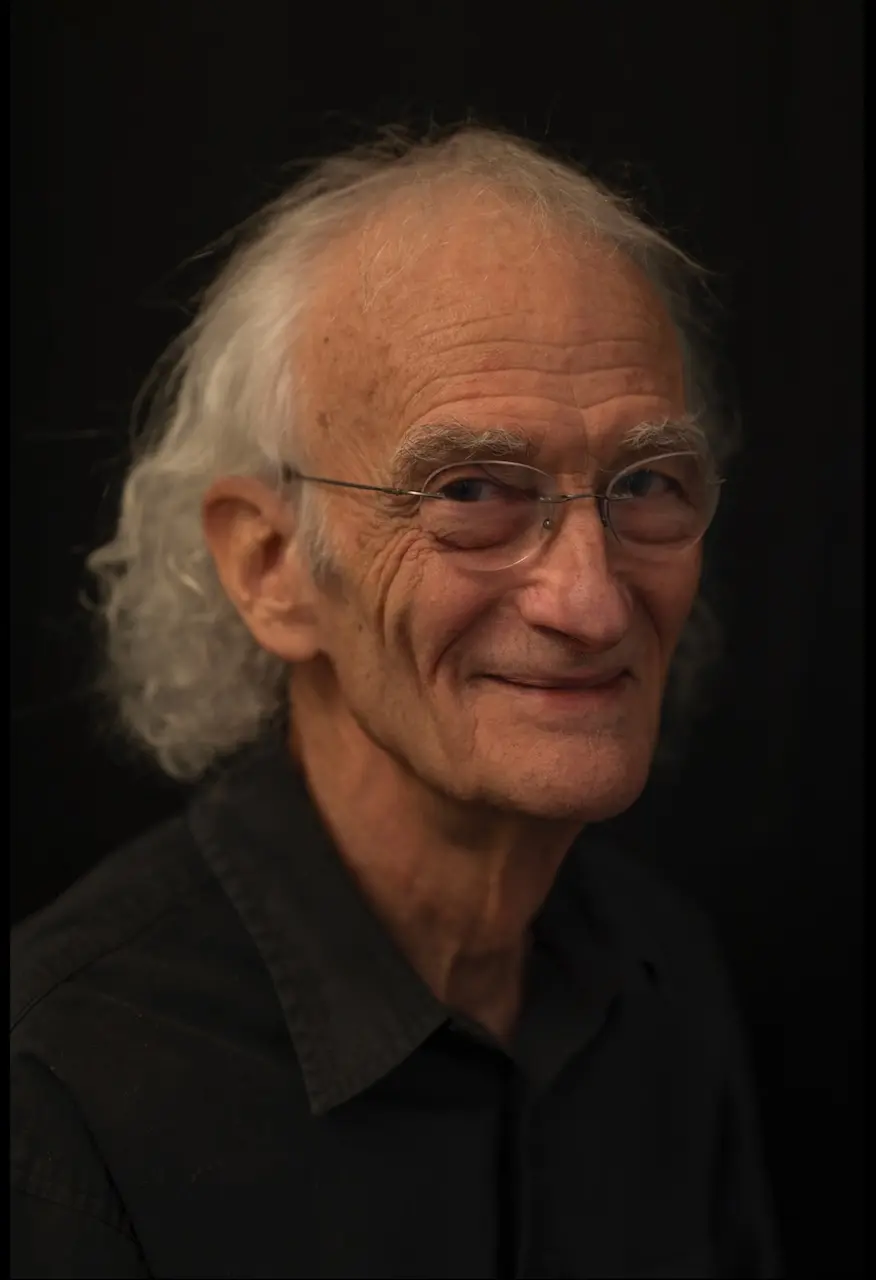
Peter d’Errico graduated from Yale Law School in 1968. He was an attorney at Dinébe’iiná Náhiiłna be Agha’diit’ahii, Navajo Legal Services, in Shiprock, 1968-1970.
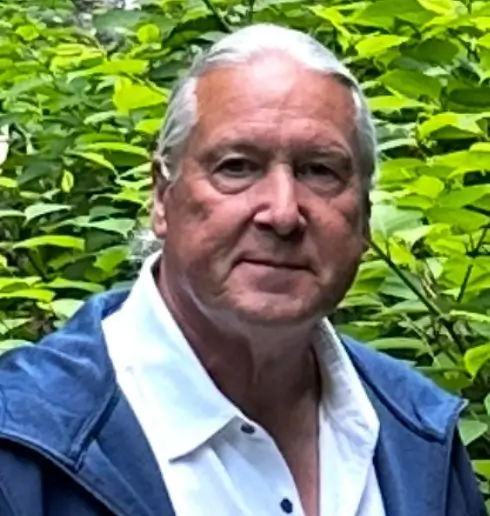
Steven T. Newcomb (Shawnee/Lenape) has been researching the history of U.S. federal Indian law and policy for four decades.
